SKIF-BP
Expert answers on SKIF-BP — the automated public finance management system: installation and configuration, administration, reporting and data analytics.
SKIF-BP
6 questionsError when signing a form in the web client.
Check the CryptoPro plugin version. The plugin version can be checked in the browser here: https://www.cryptopro.ru/sites/default/files/products/cades/demopage/simple.html. If you plan to work with signatures in IE or FireFox, try updating the plugin to version 2; if using Chrome, version 1.5 is currently the maximum.
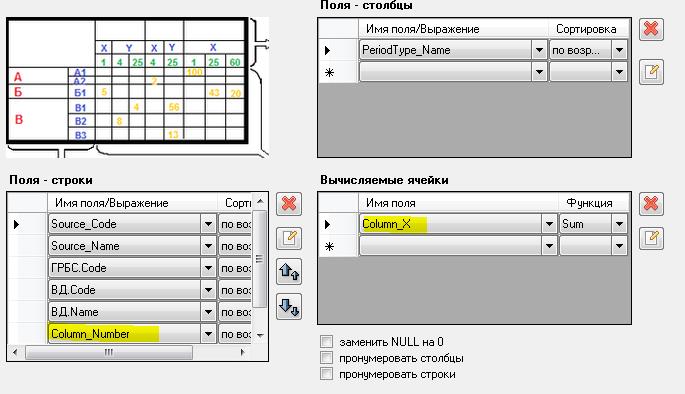
How do I unfold columns vertically in analytics as in SKIF 3?
The essence of the rotation problem is as follows:
SKIF 3 stored data vertically, i.e. the column number was the same attribute as the header attributes or the row code:
Where A and B are header attributes, Row is the row code, Column is the column, and X is the sum. In other words, each cell was stored in a separate row of the database table.
In SKIF-BP the storage is horizontal. That is, one form row is one row in the database.
You can unfold the data back to vertical in several ways. The simplest of them is the union operator.
Our analytics has two ways to use the union operator:
1. The dedicated "Union of tables" cube.
2. The universal "SQL script" cube.

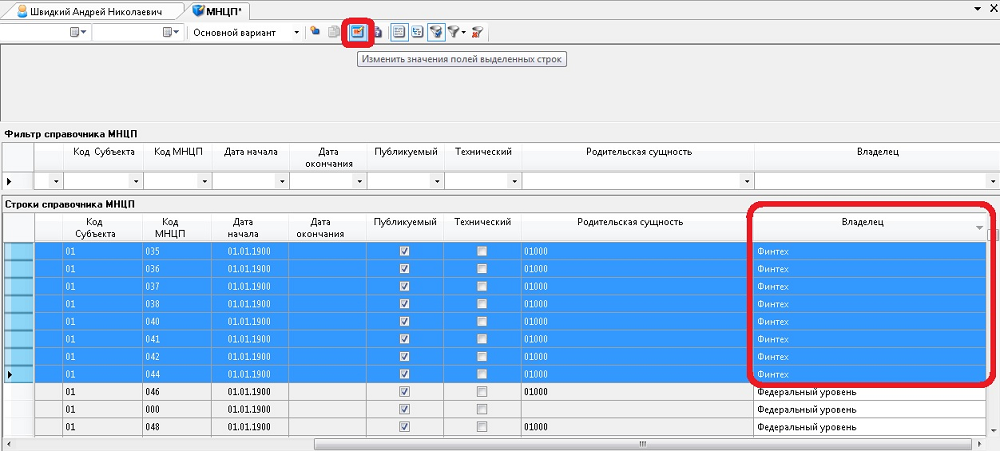
What do the messages "Indicator XXX with attributes YYY cannot be updated because it has a higher priority owner" mean and what should be done about them?
During the normal flow of the reference data formation process on your server, such messages appear only when users want to refuse the update of some indicator and, for this purpose, set themselves (with a higher priority) as the owner of this row.
To fix this situation you need to:
How do I make an analytics filter for several periods that do not follow each other?
The question of filters on intervals with the ability to obtain NON-CONSECUTIVE intervals is still hotly debated among developers.
There are two ways out at the moment:
1. Use an additional "SQL script" cube to remove the excess.
2. Create two sources for the same form but with two different filters.

Which SQL Server version should I use?
SKIF-BP can be installed on SQL 2005 and higher. SKIF 3 can be installed on 2000 and higher. However, we strongly recommend installing the maximum SQL version available for your OS at the time of deploying the software suite.
Which Postgres version should I use?
SKIF-BP can be installed on PostgreSQL 14.3 and higher.
Recommended system requirements:
Processor: 8 cores, clock speed 2.90 GHz or higher.
Platform: 32-bit or 64-bit.
RAM: 32 GB or higher.
Hard disk: the size depends on the database size, but no less than 1 GB of free disk space
Did not find an answer to your question?
Leave a request — our specialists will contact you and help you solve any task in the field of information security and automation.